Is AI code copyrightable? It depends on whether AI is a tool, a person, or a monkey
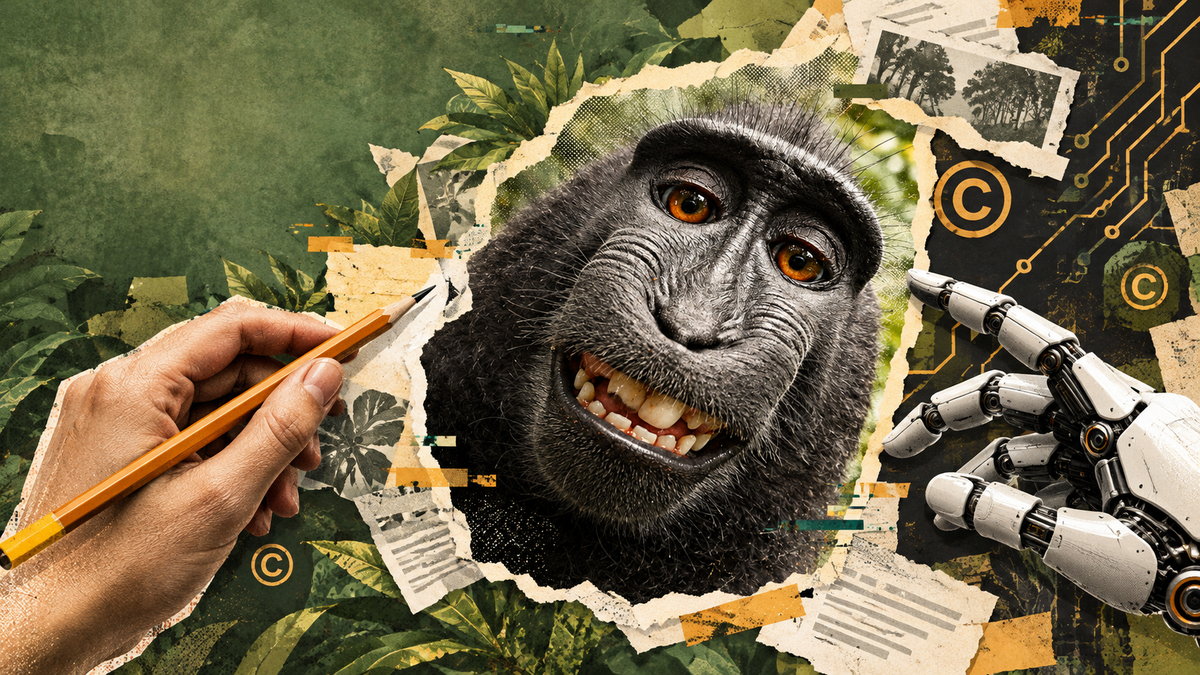
Brandon Thomas has kicked of a shitstorm by cloning multiple Adobe products, including Photoshop, Acrobat, and (my personal favourite) InDesign. This raises a plethora of questions around ethics, ownership, the future of both proprietary and open source software. Before we can answer any of these, we need to figure out: who owns the copyright?
My LinkedIn feed is full of hot takes on this. Essentially it's a four-way fight: Adobe; Brandon Thomas; Claude; or no-one. For people who don't create stuff, and don't have to worry about copyright every day, it seems obvious that there should be an answer to this, whatever it may be. Surely in the last 316 years of copyright law, we've solved the simple question of ownership.
Before you continue reading, I'm going to give you a spoiler: I don't really have an answer. You're not going to get to the end of this and feel any sense of closure. But damn, it's still an interesting ride.
First of all, a very quick "What is copyright". This thing here, the words that you are reading, is copyrighted Jason Norwood-Young (2026). I haven't had to do anything special to copyright it, like I would a patent. I add the date because copyright (generally) lasts 50 years, so in 2076, you can grab this text and do whatever you want with it.
That essentially means that I own the words, and I can tell you what you are and aren't allowed to do with them. This introduces licensing – the permissions I grant you for my copyrighted work.
Adobe's code is closed source – they give you a license to use their products (for a monthly fee), but not much else. You can't change them, add a feature, or send a copy to your mother. If you stop paying, they can retract the license.
Thomas' ArtCraft project is open source. It offers your choice of two licenses: the Apache license, and the MIT license. (Without getting too into the weeds, the MIT license is a bit more permissive for commercial work, while the Apache license forces open licensing onto derivative products, what we call a "copyleft" license.)
Importantly, it is the copyright that allows both Thomas and Adobe to enforce these licenses in the first place. If they don't own it, they can't tell you how you can use it.
Even if I were to take Thomas' InDesign (called DesignCraft), slap my own name on it and sell it, which I am allowed to do under the license, Thomas still owns the product. So how the hell does he get away with taking Adobe's software, putting his name on it, and then claiming that he owns it?
Thomas' defence is that he used a method called "clean-room design" (also called "Chinese wall"), where you just observe the output of the product without knowledge of how it's been made. It's like re-creating a great soup you had in a restaurant just by tasting it. Without clean-room design, we would never had the modern PC, the secrets of which were hoarded by IBM until someone clean-roomed the processors by simply putting electricity through one end and measuring what came out on the other end; and then passing that information on to a second team that had no access to the chips. (Another great example is this guy making Coca-Cola.)
Mystery solved, Thomas should be able to rightfully do this, right? Right????
Hold up, here's the other argument circulating on the LinkedIns: Thomas relied heavily on AI to vibe-code his side-project up. So Claude really wrote the code, not Thomas, which means that Claude owns the copyright, which in turn means Thomas can't legally license it out.
This introduces a whole bunch of other complications: if Claude owns the code, then what the hell are we all using AI for to write the world's software? As a guy who uses AI to write code that I then sell or license, this seems like a pretty fundamental question to answer before I'm forced to turn to subsistence farming.
To answer these difficult questions, we need to look at this picture of a monkey:
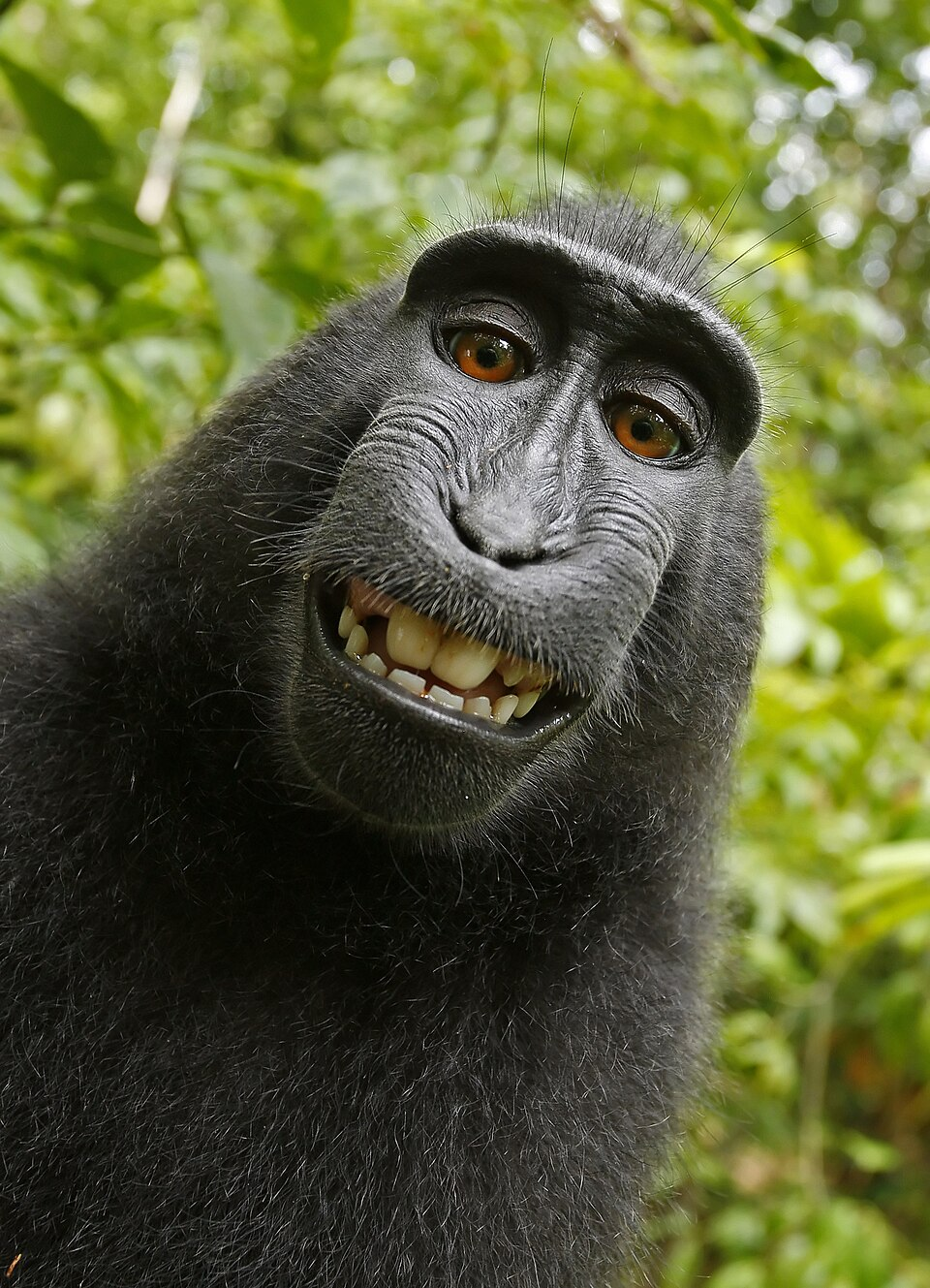
This cheeky chimp snapped this selfie using wildlife photographer David J. Slater's camera, and I have to say, the celebes crested macaques in question nailed it. Photographer Slater believed the copyright belonged to him, and started slinging the pic for profit. Animal activists PETA got involved, saying the copyright really belonged to the monkey. Then Wikipedia refused to take the image down on Slater's request, arguing that no-one owned the copyright. And once again, we are in a copyright clusterfuck.
The US copyright office eventually settled the whole debate with the opinion: "... only works created by a human can be copyrighted under United States law, which excludes photographs and artwork created by animals or by machines without human intervention", which was followed up by a bit of case law in this issue. Sorry monkey, you deserved better.
(It's also worth noting at this point that copyright is not universal – just because the US came up with this definition, doesn't mean it would apply anywhere else in the world, although some international agreements exist, most importantly the Berne International Copyright Convention. For the sake of ever finishing this article, we're going with the US definition for now.)
Back to our question of whether Claude owns anyone's code, it seems not – Claude is clearly not human, so it can't claim copyright. But it raises another problem: does anyone own AI code, or is it un-copyrightable?
Despite things not going Slater's way, he argued that it was his equipment, his expensive trip to Indonesia, and his work befriending this troupe of monkeys that created the conditions for this shot, and I think that's still valid: it's what's called the "sweat of the brow" test. This is usually used when copyrighting something boring like a database, or a list of email addresses for spamming, or an almanac of sports scores: is a stupid list copyrightable? The answer is, did it take you work to make it? If there were little beads of figurative sweat upon your withered brow while you compiled it, then yes. I'm pretty sure there was plenty of sweat, figurative and actual, in Slater's trek into the Indonesian jungle.
If you've never vibe-coded, I can assure you that there is plenty of virtual sweat, tears, and much swearing that goes into creating a professional software product. Software engineering is not just typing code, and just because we removed the typing code bit, doesn't mean that software engineering is a solved problem, with autonomous bots off doing our work while we lounge poolside all day.
When someone pays me for my code that an AI "wrote", I feel not a hint of shame. The AI is a tool, just like my keyboard and mouse, that lets me get the job done. For me, it is the camera, not the monkey.
It's certainly possible that some work by AI, with enough of a hand-waving prompt ("Build something that makes me money") could turn AI into the monkey, and give you something that might not be copyrightable. (I don't know who would test this in court, or how you'd prove it.) Despite this, I think we can say case closed on this one.
Or not. There's one more angle to think about: If you're a slave-wage peon programmer, and your side-project of re-creating all of Adobe's products blows up, and then you leave a "Fuck all-y'all, I'm out" note on your boss' desk, I've got bad news for you: that software (probably) isn't yours. It's owned by your company, even if you never signed anything to say so. If you had written a novel instead, you're probably okay, but since you're a software developer paid to write software, any software you write would be owned by the company, not you.
Let's think of Claude as a paid employee for a second, just for argument's sake. In these cases, we are paying Claude for "his" work, so anything Claude writes belongs to the "employer", the person paying the dosh.
This squares the circle quite nicely, but it does have a little knock-on effect: Anthropic doesn't get copyright of your software that you used Claude to write. So they don't get to use it to train up their models, and use your "sweat" for their benefit.
Let's check Anthropic's Privacy Policy really quickly:
"Anthropic obtains personal data from third party sources in order to train our models. Specifically, we train our models using data from the following sources: ... Data that our users or crowd workers provide, including Inputs and Outputs from our Services (unless users opt out)".
Yup, you're "licensing" Anthropic to use your work for its own foul purposes. It doesn't say it's going to use your software directly, but it can feel free to use it to "train" a model, and then have the model output your work – its own version of "clean-room design".
This leaves us with more precarious questions than when we started. AI can't claim copyright, because it's not human, but by using AI, we inadvertently license our copyright to the AI companies, which in turn allows them to pass it through a machine and claim our work belongs to them on the other side.
They, in turn, can offer the AI as a service to someone else, who then can claim copyright of your material since they never had access to the source, all the while they also give up their rights to their derivative work back to the AI.
The only way we could license the work to the AI companies is if we own it, which we do, unless we're being paid by a company to create the work, in which case they do, or if there's no "sweat" involved, in which case no-one does, and they can use it anyway because it's a monkey. Or something.
I'm off to learn how to become a subsistence farmer. Or a copyright lawyer.